#64 Hope in Darkness: Jewish History of the 14th & 15th Centuries (Part Three)

The 1400s in Jewish history was a time of turbulence and uncertainty while also a period of tremendous Jewish intellectual and mystical exploration. In this podcast episode, the last of the three-part series ‘Hope in Darkness: Jewish History of the 14th and 15th Centuries’, David examines the lives of several fascinating figures and their contributions to Jewish and world thinking. However, it is the enormity of the historical events that shaped the Jewish experience of the time, particularly in Europe, that dominates much of the material discussed in this episode. David explores the impact of printing on Jewish life and learning; the increasing interest in Hebrew and Jewish texts among Christian scholars; and the devastating consequences arising from the union of Ferdinand II of Aragon and Isabella I of Castile, leading to the unrelenting cruelty of the Inquisition and the eventual cataclysmic expulsion of the Jews of Spain.

Continue reading “#64 Hope in Darkness: Jewish History of the 14th & 15th Centuries (Part Three)”
#63 Hope in Darkness: Jewish History of the 14th & 15th Centuries (Part Two)

The second half of the 14th century saw tremendous economic and theological pressure placed on the Jews of Europe. In this podcast, David explores a series of compelling and poignant historical events that captured the trying circumstances of Jewish life in the Middle Ages in Europe. David also discusses the remarkable tenacity of Jewish communities and individuals during these dark days, revealing impressive achievements, innovation, resilience, and extraordinary demonstrations of hope.

Continue reading “#63 Hope in Darkness: Jewish History of the 14th & 15th Centuries (Part Two)”

#62 Hope in Darkness: Jewish History of the 14th & 15th Centuries (Part One)

In the wake of the global upheaval and transformation of the previous century, Jewish history of the 1300s unfolded as a mix of controversy, uncertainty, and innovation. In this podcast episode, David examines the early years of the 14th century for Jews in Europe and Asia with its many dark episodes – including expulsions, forced conversions, and plagues – occasionally offset by opportunity and reprieve, as well as remarkable intellectual and spiritual contribution. David also highlights an unexpected connection between this historical period and our own.

Continue reading “#62 Hope in Darkness: Jewish History of the 14th & 15th Centuries (Part One)”

#60 Kabbalah Since the AR”Y (2)

Kabbalah Since the AR”Y: the Vilna Gaon and Rabbi Moshe Chaim Luzzatto

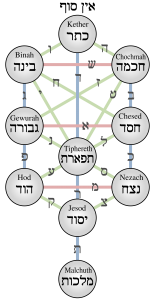
The teachings of Rabbi Isaac Luria, the AR”Y (also known as the Ari or Arizal), have been profoundly influential on Jewish mystical thought of the past five hundred years. In this episode of the podcast, the second lecture in a series exploring post-Lurianic Kabbalah, David discusses the historical background, lives, and ideas of two iconic Jewish intellectual and spiritual figures – the Vilna Gaon and Rabbi Moshe Chaim Luzzatto. In doing so, he examines their remarkable contributions to kabbalistic thought on G-d, the world, and Divine revelation.

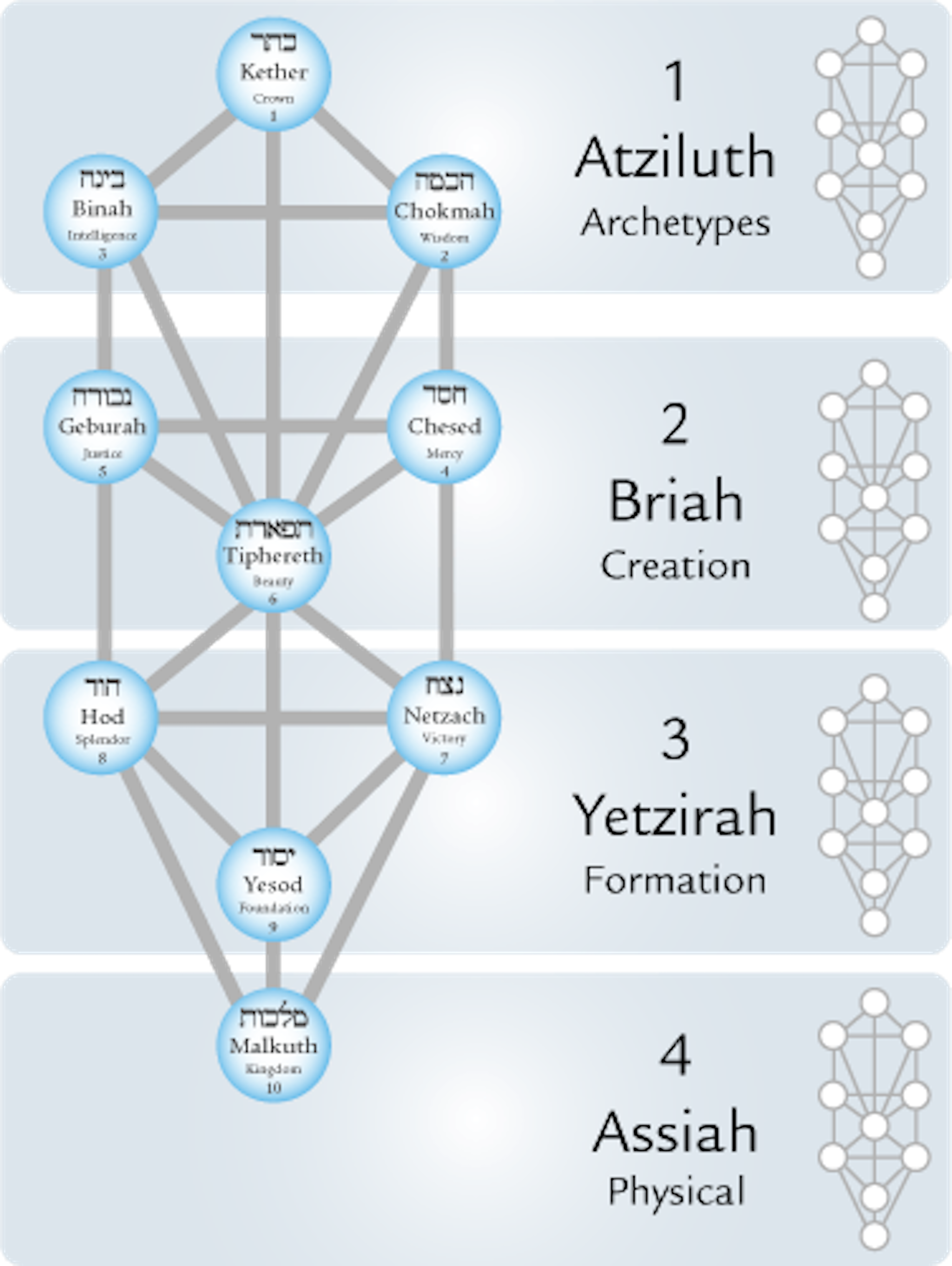
Listeners who find this material new or challenging may wish to refer to the glossary of kabbalistic terms provided here. 

Continue reading “#60 Kabbalah Since the AR”Y (2)”

#59 Kabbalah Since the AR”Y (1)

Kabbalah Since the AR”Y: Lurianic Kabbalah

While the roots of Jewish mysticism can be found in the Torah, the past millennia have contributed numerous extraordinary developments and revelations in the field of Kabbalah. In particular, the teachings and ideas of 16th century kabbalist, Rabbi Isaac Luria, also known as the AR”Y (or the Ari or Arizal), have been profoundly influential on Jewish mystical thinking, literature, and life. In this podcast episode, David provides historical context to the emergence of the Kabbalah of the AR”Y and then explores the two primary paths that disseminated his monumental ideas, through the works of rabbis Chayim Vital and Israel Sarug.

Continue reading “#59 Kabbalah Since the AR”Y (1)”

#55 The Prophets: The Twelve ‘Minor’ Prophets

A Podcast on the Prophets of Israel in Tanach (Hebrew Bible)

The Trei Asar, known in English as the twelve ‘minor’ prophets, have been fundamental to the transmission of ideas and moral perspectives through the past two and a half millennia. In this podcast episode, the final instalment of this four-part series on the prophets of Israel for Elul, David explores the fascinating lives, historical context, and profound messages of these spiritual giants. In dynamic succinctness, David marches through the short but canonical texts of Hosea, Yoel, and Amos; Ovadiah, Yonah, and Micah; Nachum, Habakkuk, and Zephaniah; Haggai, Zechariah, and Malachi. David explains the importance of each book and their contributions to Jewish and world spirituality.

Find ‘Collected Talks of David Solomon’ on the Jewish podcast rating list at Feedspot.

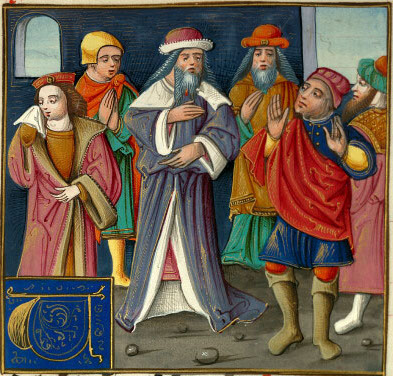
Sophonie s’adressant au peuple. Valenciennes – BM – ms. 0007 (f. 183). 16th century. Public Domain.

Continue reading “#55 The Prophets: The Twelve ‘Minor’ Prophets”

#49 When Being Righteous is not Enough: A Study of the Book of Job

A Podcast on the Book of Job in the Hebrew Bible

The Book of Job (Iyov) is a philosophical discussion on the nature of divine justice in relation to human suffering. In this podcast episode, David provides a fascinating overview of the story of Job whose tragic circumstances cause him to demand an explanation from G-d on the question: Why has this happened to me? As David explores each chapter of this biblical text, he unravels the various philosophical positions as expressed by G-d, Satan, and a range of other biblical characters to this age-old question. David also draws on views expressed by the sages, rabbis, and mystics on the Book of Job and its questions.

Read the transcript.

William Blake: Job’s Evil Dreams. Public Domain.

Continue reading “#49 When Being Righteous is not Enough: A Study of the Book of Job”

#42 Communities in Search of Meaning: Jewish History of the 17th Century (part 2)

A Jewish History Podcast

This podcast episode begins with an exploration of two significant moments in the second quarter of the 17th century: the contributions and controversies of the German rabbi and kabbalist Naphtali Bacharach and the horror of the Cossak uprisings in Ukraine under the leadership of Bohdan Khmelnytsky. With this background in place, David then moves to the extraordinary story of one of Judaism’s most infamous messianic figures, Shabtai Zvi, taking listeners on an incredible journey through mystical narratives, revolutionary ideas, political drama, spiritual aspirations, communal devastation, and historical consequences.

Shabbatai Tzvi as a prisoner of the Turks in Abydos. Unknown author – 1901-1906 Jewish Encyclopedia. From “Ketzer Geschichte,” 1701. Public Domain.

Continue reading “#42 Communities in Search of Meaning: Jewish History of the 17th Century (part 2)”

#37 A History of Mystical Encounters (part 1)

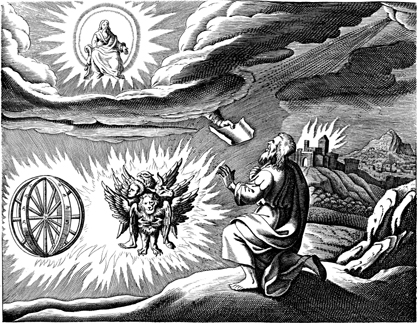
The Jewish mystical tradition has fascinating and profound speculations about accessing divine reality. In this podcast episode, the first in a four-part series entitled ‘A History of Mystical Encounters’, David explores definitions of mysticism and its manifestations in life and texts. In doing so, he looks at different forms of Jewish mystical practice, including biblical prophecy. Unusually, this lecture also involves textual study. David examines extracts from Bereishit, Genesis, and the Book of Ezekiel (Sefer Yechezkel), and discusses mystical ideas presented and the context in which they are set.

Click on the links to download the extracts from the Books of Genesis and Ezekiel discussed in this episode.

Engraved illustration of the “chariot vision” of the Biblical book of Ezekiel, chapter 1. Public Domain.


Continue reading “#37 A History of Mystical Encounters (part 1)”

#36 Chazal in the Age of Empires: An Overview of the Talmudic Period (part 3)

The period of the 3rd to 5th centuries (CE) saw a different type of world emerging from one that had, for centuries, been controlled by two empires: Rome and Parthia. In this podcast episode, David explores the new Jewish reality and the revolutionary innovations that resulted. In particular, he examines the extraordinary project of the Talmud, its remarkable later contributors, and allows us to understand the significance of these developments within the context of Jewish and world history.

Rabbi Ashi teaching at the Sura Academy. From Diaspora Museum, Tel Avi. Image used under Creative Commons licence https://creativecommons.org/licenses/by-sa/3.0/deed.en

Continue reading “#36 Chazal in the Age of Empires: An Overview of the Talmudic Period (part 3)”