#97 Unorthodox Episodes from the Talmud (4)

This final episode of David Solomon’s series “Unorthodox Episodes of the Talmud” explores the idea of the evil inclination – the yetzer harah – with a particular focus on problems relating to sexual temptation.

The Yetzer Harah

David explains that sages of the Talmud discussed how few things are as powerful as the desire for intimacy. This inclination affects all people, including great spiritual leaders.

Illustrating this point, David examines two stories from the Talmud. The first concerns Rabbi Amrum the Pious, a third-century sage who lived in the Babylonian city of Naharda’ah who fights his evil inclinations. The other looks at a tragi-comic story of Rabbi Hiyya bar Ashi, a student of Rav, who condemned himself in the face of temptation.

Both stories explore moral and ethical considerations concerning intentional, transgression, culpability, and redemption. Other concepts discussed include:

  • individual and communal shame – both in this world and the world to come
  • mystical manifestations of evil
  • the psychology of guilt and self-control
  • recognition of human failings
  • the power of sexual urges
  • whether thinking about a sin carries the same weight as its enactment
  • moral karma
  • the importance of remembering and respecting human relationships in our quest to do right
  • whether suicide is permitted in certain circumstances
  • the importance of humility
  • an appreciation that we may each fail when our moral will is tested.

In examining these two unorthodox Talmudic episodes, David discusses the notion that individuals are often tested in line with their unique moral parameters; that we should be wary of placing ourselves on moral pedestals because we may be found wanting; we are all responsible for our behaviour; and that we must know our limitations and our weaknesses.

Continue reading “#97 Unorthodox Episodes from the Talmud (4)”
#96 Unorthodox Episodes from the Talmud (3)

The third part of David’s series, Unorthodox Episodes from the Talmud, explores a fascinating series of interconnected stories involving:

  • a high-level international diplomatic mission, 
  • undercover rabbinical espionage,
  • a cast of remarkable Talmudic rabbinical figures,
  • parental concern,
  • a curious question of Jewish law,
  • the mystical powers of the rabbis, 
  • a sighting of looted treasures from the temple in Jerusalem,
  • and a quest to overturn devastating Roman decrees.

David discusses key Talmudic personalities from the first two centuries, including:

  • Rabbi Shimon Bar Yochai
  • Rabbi Yossi Ben Halafta
  • Rabbi Reuben Ben Strobilus
  • Rabbi Yossi HaGellili
  • Rabbi Eleizer Ben Yossi
  • as well as (lehavdil) Ben Tamalia.

He also provides historical context for the events discussed in the Talmudic passages, some of the prevailing cultural and religious norms of the time, and the messages that arise from this unorthodox episode of the Talmud.

Continue reading “#96 Unorthodox Episodes from the Talmud (3)”

#92 The Twelve Minor Prophets (3)

Part three of David Solomon’s lecture series on the Trei Asar, the twelve ‘minor’ prophets of Israel, examines the texts and themes of:

  • Nachum,
  • Habakkuk, and
  • Tzephaniah.
David Solomon's podcast lecture on Nachum,Habakkuk, and Tzephaniah
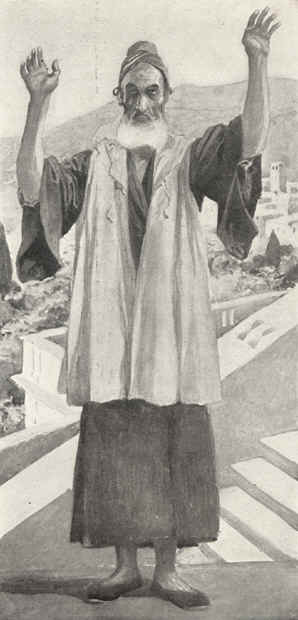
Habakkuk, the Biblical prophet, watercolor circa 1896–1902 by James Tissot. Public domain.

While these three books are short in length, David explains the importance of each, their place in the prophetic continuum, and how they sit in relation to significant moments in biblical and world history. 

The lecture delves into the prophets’ exploration of:

  • the destruction of Assyria
  • the rise of Babylonia
  • the destruction of the enemies of Israel
  • the destruction of sinners
  • the fall of Jerusalem
  • the need for teshuva and self-improvement
  • justice for the nations
  • divine justice
  • the role of God in history
  • the power of the God of Israel.

David provides a historical framework for each of the prophets. He reviews the details of their lives and puts the enormity of their words into context. 

Continue reading “#92 The Twelve Minor Prophets (3)”

#89 The Historical Story of Tanach

 In this Jewish History lecture, David Solomon follows the chronological narrative of the Tanach (Hebrew Bible), outlining the key figures and events of the biblical period, including:

  • the patriarchs and matriarchs
  • the Egyptian exile and the going out of Egypt
  • the settling of the land and the period of the judges
  • the period of the kings
  • the rise of the prophets of Israel
  • the division of the united kingdom of Judah into northern and southern kingdoms
  • the destruction of the northern kingdom, Israel, by the Assyrian Empire
  • the destruction of Judah, the southern kingdom, and the temple in Jerusalem by the Babylonian Empire
  • the 70-year Babylonian exile
  • the return to Zion and the rebuilding of the temple.

David provides an overview of the spiritual and geopolitical driving forces behind the events of this period. He also explains the historiographical status of the various phases of the bible.

This lecture, recorded in Israel in 2009, is an adaptation of David’s popular talk “The Whole of the Bible in One Hour.” It provides a concise historical overview of the biblical period but, unlike The Bible in One Hour, does not explore the ideas and themes of Tanach in depth.

For those interested, a video recording of “The Whole of the Bible in One Hour” can be found above and here https://youtu.be/qIu_iZzuTfM

Continue reading “#89 The Historical Story of Tanach”

#87 Women in Jewish History: the Biblical Period

David Solomon explores the lives, contributions, and circumstances of 14 women from the biblical period of Jewish History. He examines:

  • Rachav
  • Devorah
  • Yael
  • Bat Yiphtach
  • Pilegesh Bagiv’ah
  • Ruth
  • Channah
  • Michal
  • Abigail
  • Bat Sheva
  • Jezebel
  • Ataliah
  • Yehosheva
  • Chuldah
David Solomon podcast on women in the biblical period of Jewish History
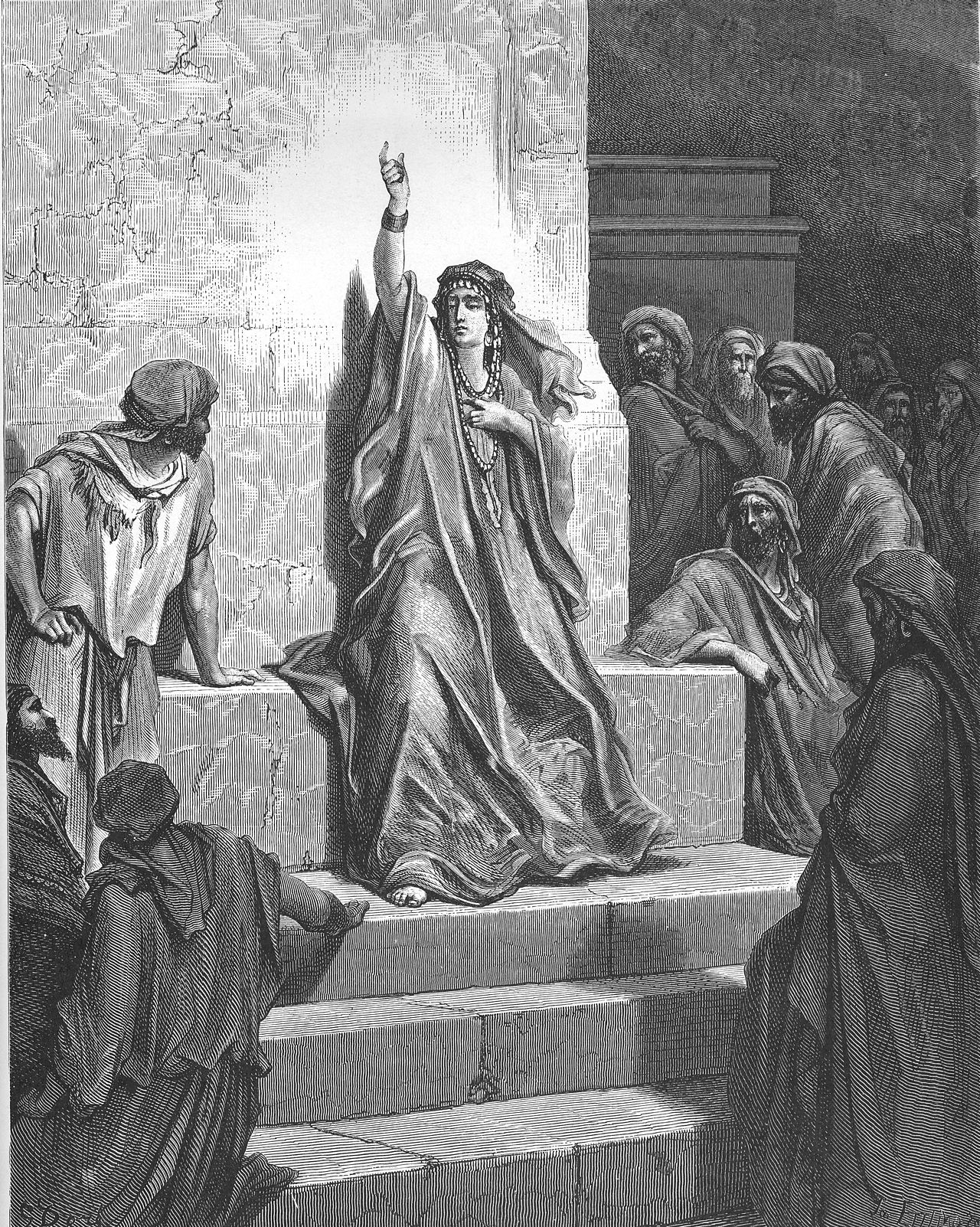
Deborah Praises Jael by Gustave Doré

Among their numbers were:

  • queens
  • prophets
  • judges
  • politicians

as well as women who were distinguished for their faith, integrity, loyalty, courage, and beauty.

In addition to providing insight into the experiences of these fascinating women, David explains their historical legacies, including:

  • the preservation of the Davidic line
  • the cementing of Judaism’s attitude towards celibacy
  • the power of prayer
  • the importance of education
  • women’s connection to Jewish religious practice.

He also traces the changing lot of women throughout the biblical period, from empowerment to disempowerment and back again.

This is the first part of a seven-part series on women in Jewish History David delivered at the Jewish Museum of Australia in 2017. Unfortunately, only some of the talks in the series were successfully recorded. You can find existing lectures by David from that series as well as from others talks on women in Jewish History David has given here:

#73 Women in Jewish History: the Second Temple Period

#14 Worlds in transition: Jewish History of the 16th Century part 3

#43 Communities in Search of Meaning: Jewish History of the 17th Century (part 3)

#50 Women in Jewish History: 18th to 20th Centuries

#51 Women in Jewish History: 20th to 21st Centuries

Continue reading “#87 Women in Jewish History: the Biblical Period”

#76 Revelation & Revolution: Jewish History of the 18th Century (3)

In this podcast episode, David examines a phase in 18th century Jewish history that he calls the ‘zenith of rabbinics’ for its extraordinary collection of learned rabbis. Among this ensemble of remarkable figures, one man towered over the rest – Elijah, the Vilna Gaon.

The Gra, as the Gaon of Vilna was also known, was an unparalleled prodigy in Jewish textual study and methodology, with an almost incomprehensible knowledge of Torah. David explores the life and contribution of the Gra and why he is one of the most revered Torah scholars of the past millennium. He also discusses the life and work of the Gra’s greatest student, Rabbi Chayim of Volozhim.

The 18th century also saw the rise of a new phenomenon in Jewish history, known as the Haskalah, the Jewish Enlightenment. Two enormously important figures to launch this seismic shift in Jewish life were the philosophers:

  • Moses Mendelssohn, often called the father of the Haskalah, and
  • Salomon Maimon.

Other intellectuals of note in the early days of the Haskalah that David mentions were:

  • David Friedlander
  • Solomon Dubno
  • Naphtali Herz Wessely.

Through the story of these impressive intellectual figures, David paints a picture of the historical circumstances, rights, challenges, and emerging opportunities for 18th century European Jews.

Providing background to this discussion, he also explores the legal and political reforms of:

  • Frederick the Great
  • Joseph II.

David concludes with a discussion of another important figure from the 18th century, Meyer Amschel Rothschild, founder of an unprecedented banking dynasty. As a result of its tremendous business success, the Rothschild family pioneered a new type of Jewish participation and influence in broader society, stretching to the highest echelons of the European establishment.

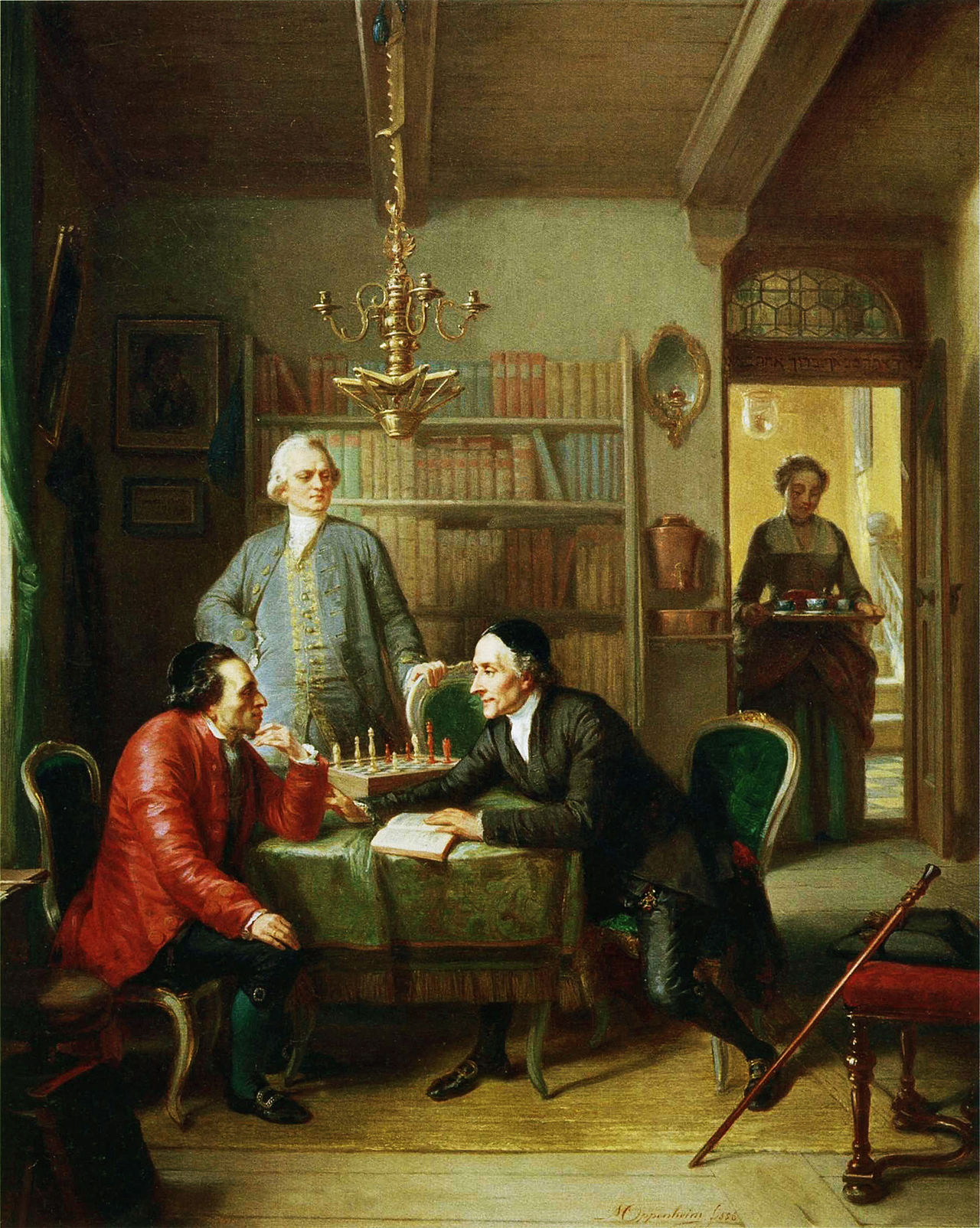
Mendelssohn, Lavater and Lessing, in an imaginary portrait by the Jewish artist Moritz Daniel Oppenheim (1856). Collection of the Judah L. Magnes Museum

#75 Revelation & Revolution: Jewish History of the 18th Century (2)

This week David examines the beginnings of Chassidism, one of the most influential Jewish spiritual movements to emerge in the modern Jewish world. He discusses key individuals who launched – and developed – this extraordinary revolution and explores the central ideas and contributions of Chassidism to Jewish history, practice, religion, and life. As part of this fascinating Jewish history lecture, David focuses on the lives and ideas of:


  • The Baal Shem Tov – Shivchei HaBesht
  • Avraham Gershon of Kitov
  • Maggid of Mezeritch
  • Yaakov Yosef of Polnoyye
  • Levi Yitzchak of Berditchev
  • Shneur Zalman of Liadi
  • Nachman of Breslov.

He examines remarkable concepts developed by early Chassidic leaders, including:

  • the sparks of love
  • the light of the intellect
  • conversations with G-d.

as well ideas like:

  • devekut
  • hashgachah pratit
  • exile of the soul and raising the sparks
  • prayer over study
  • the ecstatic service of the heart
  • the spiritual importance of joy
  • love of every Jew
  • the idea of the tzaddiq.
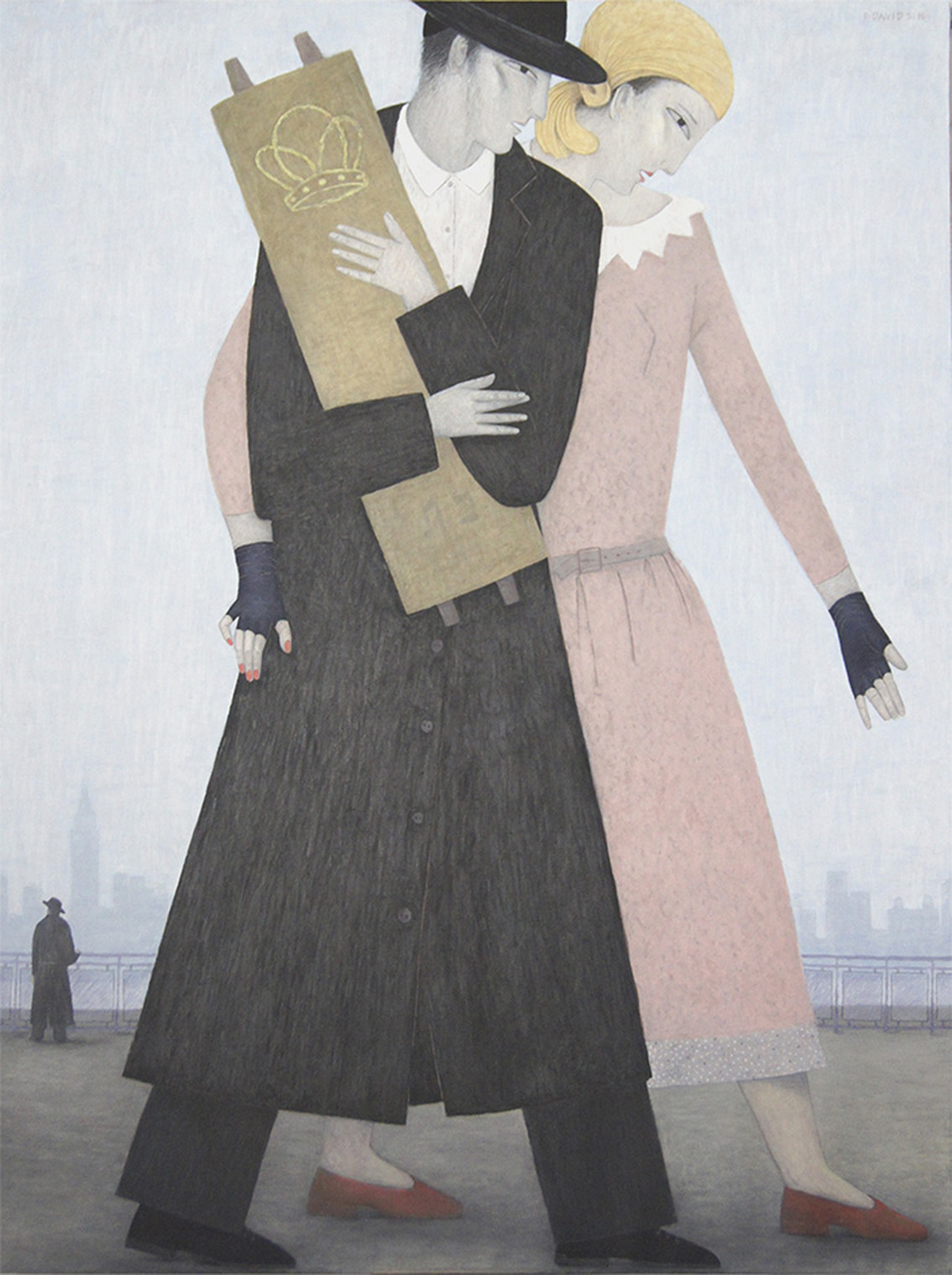
Hasidic couple in New York, painting by Roger David, 150 cm x 201 cm, oil on canvas, 2016. This file is licensed under the Creative Commons Attribution-Share Alike 4.0 International license. https://commons.wikimedia.org/wiki/File:Hasidic_couple_in_New_York,_painting_by_Roger_David.jpg

David also maps out the historical context of this remarkable phenomenon. He discusses opposition that emerged in large parts of the Jewish world to Chassidic ideas and practice and the destructive nature of some of these conflicts. He also considers a number of interesting developments that resulted in Jewish history in the wake of Chassidism.

#72 The Century of the Jewish Doctor

For centuries, Jewish communities were known for producing doctors of the highest order. Even in the most profound climates of anti-semitism, kings and nobles sought the care of Jewish physicians. In this podcast episode, David examines the period he refers to as the “century of the Jewish doctor” for its examples of remarkable figures who lead the way in medical treatment and research.

Watch the lecture here.

In this fascinating Jewish history lecture, David explores the lives and contributions of four outstanding doctors of the 16th century:

  • Moses Hamon
  • Garcia D’Orta
  • Amato Lusitano
  • Roderigo Lopez.

In doing so, he also discusses:

  • the schools of medicine which trained Jewish physicians and the circumstances under which this occurred
  • the reasons behind the demand for Jewish physicians by monarchs across Europe and Asia
  • Jewish contributions to anatomy, herbalism, naturalism, infectious disease, and the synthetisation of eastern and western medicine in the 16th century
  • the continuing impact of the Inquisition on Jewish life and the precarious existence of ‘new’ Christians
  • the embrace of Jewish refugees from the Iberian Peninsula by the Ottoman Empire
  • the expansion of India as a destination for Jews and the spectre of the Portuguese Inquisition.


Continue reading “#72 The Century of the Jewish Doctor”

#71 A Prophetic Revolution In One Hour

In the first millennia BCE, the prophets of Israel launched an unprecedented spiritual revolution, the impact of which has resonated throughout the ages and across the world. In this fascinating lecture, David presents an overview of the twelve ‘minor’ prophets of Israel. Although their messages contained profound insight, analysis, and inspiration, these prophets are known in English as ‘minor’ because their books are short compared to those of the ‘major’ prophets: Isaiah, Jeremiah, and Ezekiel. With lightning speed and characteristic clarity, David takes us through the story of these prophets and reminds us of the remarkable relevance of their words for us today.

In this podcast episode, David examines the life and ideas of the following prophets:
  • Hosea
  • Joel (Yoel)
  • Amos
  • Obadiah (Ovadiah)
  • Jonah (Yonah)
  • Micah
  • Nachum
  • Habakkuk
  • Zephaniah
  • Haggai
  • Zechariah
  • Malachi
He places these prophets in their historical context, looking at the following periods and events:
  • life in the northern Kingdom of Israel and the Kingdom of Judea (Judah)
  • the destruction of the northern kingdom by the Assyrians
  • the assault on Jerusalem by the Assyrians
  • the defeat of the Assyrians by the Persians
  • the Babylonian exile
  • the return to Zion and the rebuilding of Jerusalem under the proclamation of Cyrus
  • the beginning of the Second Temple Period.
David delivered this talk in 2015 at the Heinrich-Böll-Stiftung.

# 70 From Exile in Paradise to Redemption in Hell: Jews and Judaism in Germany – past, present and future

Although the Holocaust looms large as the defining feature of Jewish life in Germany, it was not an isolated historical event for German Jews. The Shoa followed a long and tragic trail of massacres, pogroms, and persecutions. However, the historical relationship between the Jewish and German peoples consisted of more than bloodshed and hardship. As David explains in this lecture, “the symbiotic relationship between the Jews of Germany and the general German population was nothing short of astounding.”

In this podcast episode, From Exile in Paradise to Redemption in Hell Jews and Judaism in Germany: past, present, and future, David explores the long and fascinating story of German Jewish life, from the days of the Roman Empire to the present, covering:

  • Jews and the Roman Empire
  • the beginnings of Ashkenazi Jewry and the influence of Rabbeinu Gershom
  • the Rhineland Massacres of the 11th century, known in Jewish history as the Akedah
  • Meir of Rottenberg and Asher ben Yechiel
  • the constant return of Jews to Germany despite ongoing persecution and recurring massacres
  • the impact of the Reformation
  • the restriction of Jews to money lending and their subsequent influence on economic policy
  • Moses Mendelssohn, the Enlightenment, and secular Judaism
  • Jewish conversion to Christianity as an essential requirement for advancement in 19th Germany
  • Jewish mystical interpretations of the relationship between Jews and Germany
  • the growth of contemporary Jewish communities in Germany
  • the enormity of the Shoa and its place in history
  • the integral nature of Jews to German life and history.

You can also watch the lecture on YouTube.

David delivered this talk in 2013 at the Jewish Museum of Berlin, accompanying the special exhibition “The Whole Truth.”