#52 The Prophets: Isaiah

A Podcast on the Prophet Isaiah in Tanach (Hebrew Bible)

The Prophets of Israel were a unique and revolutionary spiritual phenomenon with profound impact across the ages. In this podcast episode, the first of a four-part series on the prophets scheduled for Elul, David examines the context, character, and inspirational message of the Prophet Isaiah (Yeshayahu), the first of the ‘major prophets’. In doing so, David discusses how relevant the words and influence of this remarkable biblical figure – and particularly, his insight into the concept of teshuva – remain for us today.
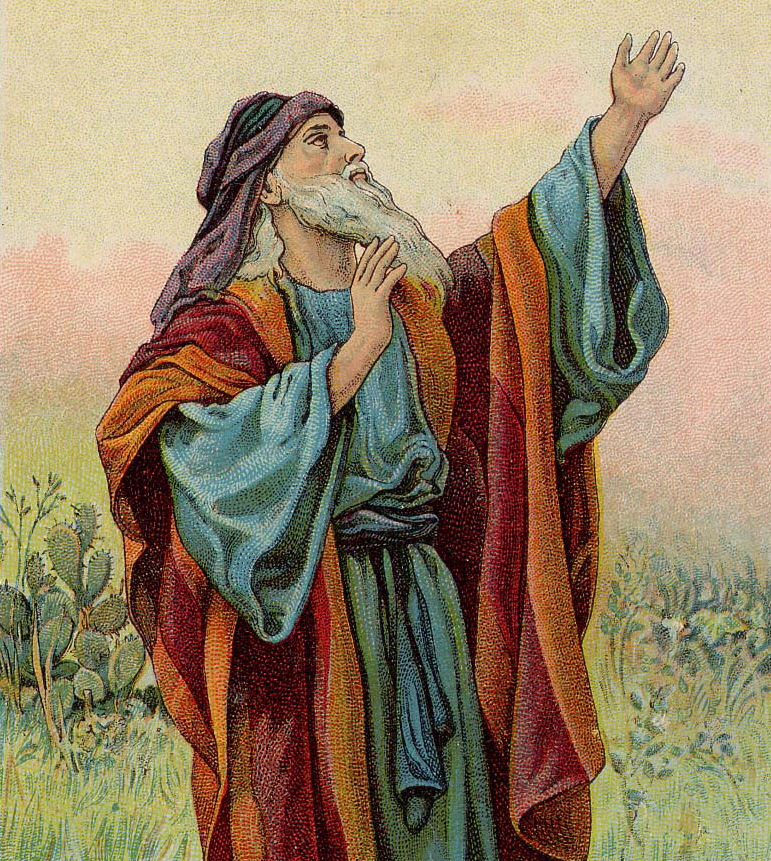
Isaiah; illustration from a Bible card published by the Providence Lithograph Company. 1904. Public Domain.

Continue reading “#52 The Prophets: Isaiah”

#50 Women in Jewish History: 18th to 20th Centuries

A Podcast on Women in Jewish History 

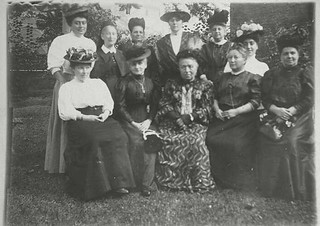
From mystics and messianic figures to writers, activists, and politicians women made enormous contributions to Jewish and world history during the four centuries examined in this lecture. In this podcast episode, David explores the characters and contributions of a collection of “remarkable and extraordinary” women from the mid 18th to 20th centuries whose legacies continue to fascinate and whose work and ideas helped shape the world in which we live today.

This episode marks a milestone for the podcast: 50 episodes and a year since the podcast was launched. We thank you for joining us on this journey.

Outdoor group portrait of the women on the first board of the Weibliche Fuersorge (Care for Women Society); Frankfurt am Main. No known copyright restrictions. (see https://www.flickr.com/photos/center_for_jewish_history/3507968224)

Continue reading “#50 Women in Jewish History: 18th to 20th Centuries”

#49 When Being Righteous is not Enough: A Study of the Book of Job

A Podcast on the Book of Job in the Hebrew Bible

The Book of Job (Iyov) is a philosophical discussion on the nature of divine justice in relation to human suffering. In this podcast episode, David provides a fascinating overview of the story of Job whose tragic circumstances cause him to demand an explanation from G-d on the question: Why has this happened to me? As David explores each chapter of this biblical text, he unravels the various philosophical positions as expressed by G-d, Satan, and a range of other biblical characters to this age-old question. David also draws on views expressed by the sages, rabbis, and mystics on the Book of Job and its questions.

Read the transcript.

William Blake: Job’s Evil Dreams. Public Domain.

Continue reading “#49 When Being Righteous is not Enough: A Study of the Book of Job”

#48 Two Temples (part 4)

A Podcast on Tanach (Hebrew Bible) and Jewish History

The arrival of General Pompey into Jerusalem heralded the beginning of the end for the Second Temple and Jewish sovereignty in the Land of Israel. In this podcast episode, timed to coincide with Tisha B’Av, David explores the fascinating drama of the reign of Herod; the rise of Judean resistance to Rome; and the brutal and tragic consequences that came from the inevitable Jewish rebellion. David examines the final extraordinary months and days leading up to the destruction of the Temple in Jerusalem and the long-term ramifications of this historic cataclysm for the Jewish people.

Pompey enters the Jerusalem Temple. Painting by Jean Fouquet, after an event recorded by Flavius Josephus in The Antiquities of the Jews. Public Domain.

Continue reading “#48 Two Temples (part 4)”

#46 Two Temples (part 2)

A Podcast on Tanach (Hebrew Bible) and Jewish History

The latter years of the First Temple period saw the Kingdom of Judah contending with dangers posed by the politics of the region and the fluctuating strengths and flaws of the reigning Judean kings. In this podcast episode, David examines the eighth to sixth centuries BCE. He discusses the perilous journey of the nation of Israel amid a changing geopolitical landscape; the rise and influence of the prophets of Israel; and the profound impact and historical reverberations of Nebuchadnezzar’s destruction of the First Temple and the exile of the Jewish people into Babylon.

Nebuchadnezzar camp outside Jerusalem. Artist unknown but Illustration from Petrus Comestor’s ‘Bible Historiale’, France, 1372. Public Domain. Continue reading “#46 Two Temples (part 2)”

#44 Communities in Search of Meaning: Jewish History of the 17th Century (part 4)

A Jewish History Podcast

The final lecture in this four-part series provides a fascinating overview of the closing decades of the 17th century and the historical events and characters that would prepare the world for the new century. In this podcast episode, David examines the extraordinary stories of a Portuguese explorer; of the reputed appearance of the lost ten tribes; of the well-argued lobbying that allowed Jews to return to England; of the enormous spiritual and intellectual whirlwind that was Baruch Spinoza; of communal tragedy in Yemen; and of the remarkable story of a mass immigration to the Land of Israel that went terribly wrong – only to be resolved in the 21st century.

Emanuel de Witte, Interior of the Portuguese synagogue in Amsterdam. Public Domain.

Continue reading “#44 Communities in Search of Meaning: Jewish History of the 17th Century (part 4)”

#43 Communities in Search of Meaning: Jewish History of the 17th Century (part 3)

A Jewish History Podcast

In this podcast episode, David examines the lives, contributions, and influences of six significant Jewish women from the 17th century. In exploring the individual stories of these poets and scholars, merchants and messianic figures, David provides fascinating insight into different areas of Jewish life in the 1600s as well as into the remarkable – and sometimes unexpected – responsibilities, opportunities, and accomplishments of Jewish women from the time.

Réunion de dames, Abraham Bosse, 17th century. Public Domain.


Continue reading “#43 Communities in Search of Meaning: Jewish History of the 17th Century (part 3)”

#42 Communities in Search of Meaning: Jewish History of the 17th Century (part 2)

A Jewish History Podcast

This podcast episode begins with an exploration of two significant moments in the second quarter of the 17th century: the contributions and controversies of the German rabbi and kabbalist Naphtali Bacharach and the horror of the Cossak uprisings in Ukraine under the leadership of Bohdan Khmelnytsky. With this background in place, David then moves to the extraordinary story of one of Judaism’s most infamous messianic figures, Shabtai Zvi, taking listeners on an incredible journey through mystical narratives, revolutionary ideas, political drama, spiritual aspirations, communal devastation, and historical consequences.

Shabbatai Tzvi as a prisoner of the Turks in Abydos. Unknown author – 1901-1906 Jewish Encyclopedia. From “Ketzer Geschichte,” 1701. Public Domain.

Continue reading “#42 Communities in Search of Meaning: Jewish History of the 17th Century (part 2)”

#41 Communities in Search of Meaning: Jewish History of the 17th Century (part 1)

A Jewish History Podcast

With a background of war, emerging superpowers, and the Enlightenment, Jewish History of the 17th century is largely seen through the prism of communal experience. In this podcast episode, David explores the narratives and circumstances of communities across Europe, tales of emerging Jewish life in the Americas, and accounts of the situation for Jews in the Land of Israel. In examining these fascinating stories, David also weaves in portraits of individuals, showing how their contributions and situations were reflected in the broader picture of shared Jewish experience.

The old synagogue in Josefov, Prague. Public Domain.

Continue reading “#41 Communities in Search of Meaning: Jewish History of the 17th Century (part 1)”

#39 A History of Mystical Encounters (part 3)

A Podcast on Jewish Mysticism and Kabbalah

The Jewish mystical concept of devekut is largely concerned with ways through which a person can become closer to Gd. In this podcast episode, David discusses two of the more practiced paths towards devekut: prayer and sex. He also examines profound themes in Sefer HaBahir and touches on the fundamental kabbalistic text of the Zohar, providing a fascinating explanation of the structure and meaning of the mystical idea of the sefirot.
This episode makes reference to an illustration of the sefirot as provided in Dr. Daniel Matt’s translation of the Zohar. For copyright reasons, we have provided an alternative image of the sefirot (see graphic below).
The Kabbalistic Tree of Life with the names of the Sefirot and paths in Hebrew. Public Domain.

Continue reading “#39 A History of Mystical Encounters (part 3)”