This final part of David Solomon’s Jewish History overview series explores the biblical period, from Avraham to the Jewish return to Zion after the Babylonian exile. The talk covers:
the patriarchs and matriarchs
the Egyptian exile and the going out of Egypt
the settling of the land and the period of the judges
the period of the kings
the rise of the prophets of Israel
the division of the united kingdom of Judah into northern and southern kingdoms
the destruction of the northern kingdom, Israel, by the Assyrian Empire
the destruction of Judah, the southern kingdom, and the temple in Jerusalem by the Babylonian Empire
the 70-year Babylonian exile
the return to Zion and the rebuilding of the temple.
David examines this period through a historical lens. He also provides content and thematic overviews of the books of the Hebrew Bible.
Part two of David Solomon’s Zoom series, The Power of Change, the Challenge of Teshuva, looks at the idea of individual and collective teshuvah in Tanach.
The lecture examines the story of the prophet Jonah and the teshuvah of the city of Nineveh. David explores different views around the city’s repentance and its connection to the divine message entrusted to Jonah for the population. He also discusses Jonah’s struggle with the responsibilities placed upon him and his path towards his own teshuvah.
The other story examined in this episode is that of Menasseh, King of Judah. David discusses prophetic passages that deal with Menasseh’s repentance and its reflection in the general prophetic narrative on teshuvah.
As always, David provides overall context to these biblical texts and their associated messages. He also reminds us of the opportunities they offer in our own explorations in teshuvah.
The first episode of David Solomon’s Elul Zoom lecture series, The Power of Change, the Challenge of Teshuva, considers early biblical figures whose individual examples of teshuva illustrate a range of human responses to this powerful idea of self-investigation, repentance, and remorse.
David examines four biblical stories, those of:
Cain
Avimelech
King Saul
King David
each of whom acknowledged their transgressions in varying ways, providing fascinating insights into how different people accept responsibility for their mistakes or misdeeds – and what complete teshuva looks like.
Drawing on biblical narratives and commentary from the prophets, the Talmud and more modern thinkers, David explores ideas of personal responsibility and genuine repentance. He also discusses how these biblical examples address questions of forgiveness and redemption.
As always, David provides biblical and historical context to the discussion and invites his audience to examine these big ideas in relation to the text and themselves.
David Solomon examines the prophets who lived during the period after Israel’s return to Zion, following the Babylonian exile, namely:
Hagai
Zechariah
Malachi.
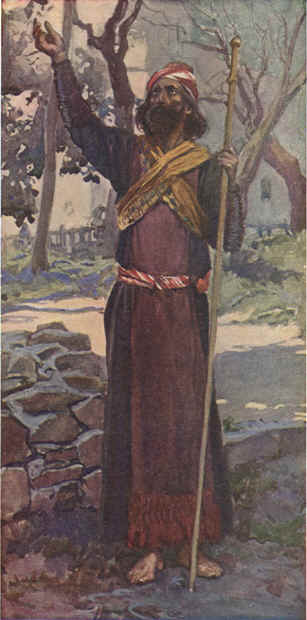
Zechariah as depicted by James Tissot. Public domain.
With their unique post-exilic messages, these three prophets addressed the concerns of a population grappling with rebuilding Jerusalem after generations away. Some of the ideas expressed in their powerful prophetic books include:
the need to rebuild the leadership of Israel
the importance of building a new temple in Jerusalem
a call to do teshuva
rebuilding oneself through dialogue with God
the failure of previous generations
creating righteous leadership
ecstatic visions
the implications of changing geopolitical realities
false prophecy
the end of the prophetic epoch.
David closely examines key passages of these biblical texts, explaining their meaning and the implications of their messages.
As always, he places the prophets, their lives, and their words in historical context. He also emphasises the lasting importance of their ideas for the Jewish people as a nation and for us all as individuals.
Part three of David Solomon’s lecture series on the Trei Asar, the twelve ‘minor’ prophets of Israel, examines the texts and themes of:
Nachum,
Habakkuk, and
Tzephaniah.
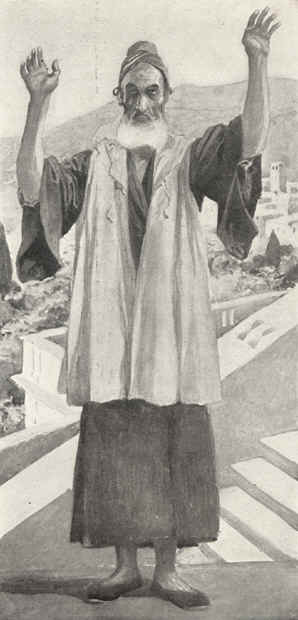
Habakkuk, the Biblical prophet, watercolor circa 1896–1902 by James Tissot. Public domain.
While these three books are short in length, David explains the importance of each, their place in the prophetic continuum, and how they sit in relation to significant moments in biblical and world history.
The lecture delves into the prophets’ exploration of:
the destruction of Assyria
the rise of Babylonia
the destruction of the enemies of Israel
the destruction of sinners
the fall of Jerusalem
the need for teshuva and self-improvement
justice for the nations
divine justice
the role of God in history
the power of the God of Israel.
David provides a historical framework for each of the prophets. He reviews the details of their lives and puts the enormity of their words into context.
This second instalment of David Solomon’s series on the Trei Asar, the twelve “minor” prophets, explores the lives and books of:
Ovadiah (Obadiah),
Yonah (Jonah), and
Michah.
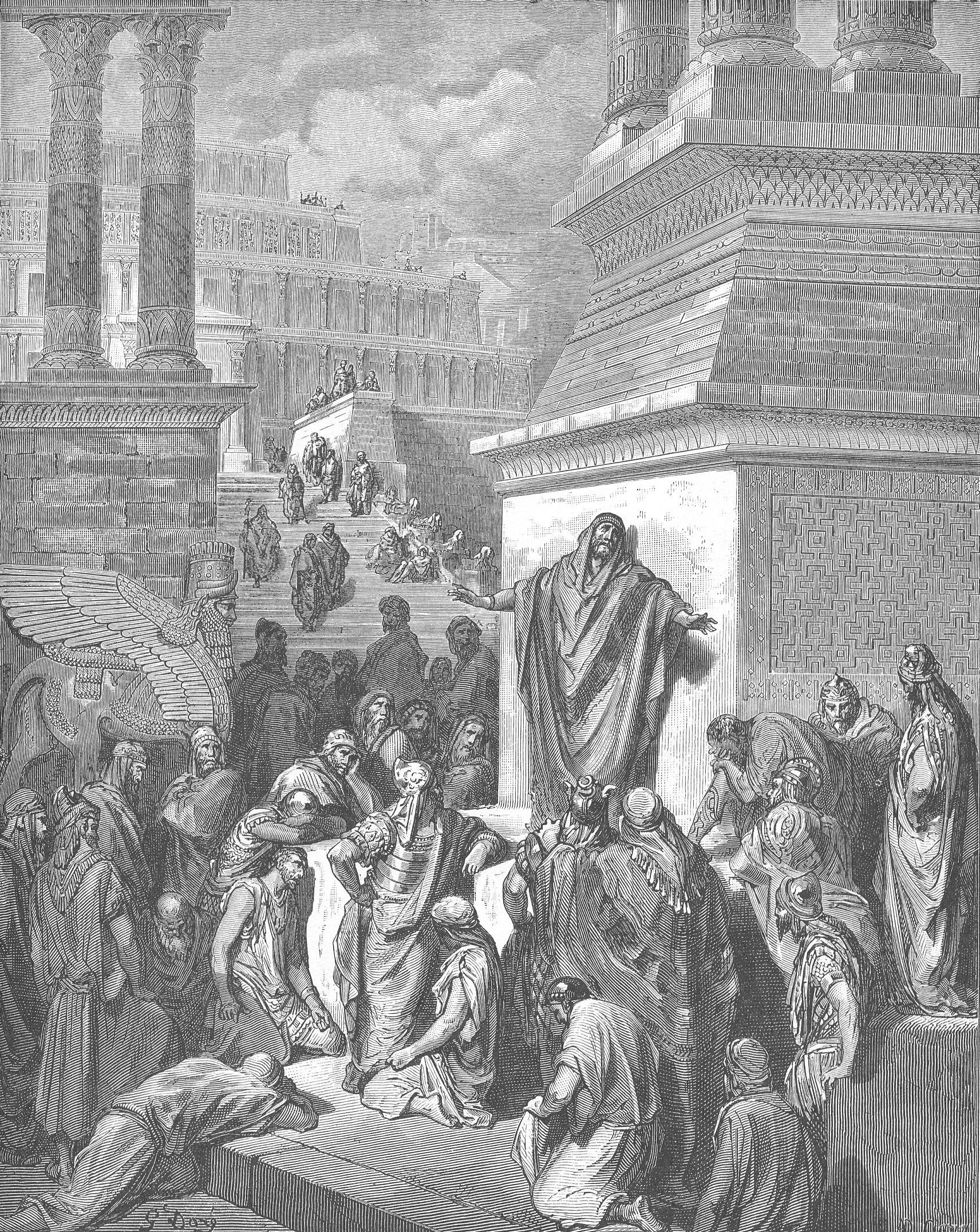
Jonah Preaching to the Ninevites (1866) by Gustave Doré. Public domain.
David examines the historical contexts of all three prophets and how they are reflected in the texts. He also discusses the key themes in these three prophetic books, including:
national and individual teshuvah
the destruction of the Kingdom of Israel
false prophets and prophecy
Edom and its spiritual and geo-historical connections
destinations of exile
messianic visions
the importance of ethical and just behaviour.
In exploring these themes, David also delves into the words of these prophets. He examines, line-by-line, some of the key passages of the books and reveals the remarkable power and substance of these fundamental sacred works.
In this Jewish History lecture, David Solomon follows the chronological narrative of the Tanach (Hebrew Bible), outlining the key figures and events of the biblical period, including:
the patriarchs and matriarchs
the Egyptian exile and the going out of Egypt
the settling of the land and the period of the judges
the period of the kings
the rise of the prophets of Israel
the division of the united kingdom of Judah into northern and southern kingdoms
the destruction of the northern kingdom, Israel, by the Assyrian Empire
the destruction of Judah, the southern kingdom, and the temple in Jerusalem by the Babylonian Empire
the 70-year Babylonian exile
the return to Zion and the rebuilding of the temple.
David provides an overview of the spiritual and geopolitical driving forces behind the events of this period. He also explains the historiographical status of the various phases of the bible.
This lecture, recorded in Israel in 2009, is an adaptation of David’s popular talk “The Whole of the Bible in One Hour.” It provides a concise historical overview of the biblical period but, unlike The Bible in One Hour, does not explore the ideas and themes of Tanach in depth.
For those interested, a video recording of “The Whole of the Bible in One Hour” can be found above and here https://youtu.be/qIu_iZzuTfM
David Solomon explores the lives, contributions, and circumstances of 14 women from the biblical period of Jewish History. He examines:
Rachav
Devorah
Yael
Bat Yiphtach
Pilegesh Bagiv’ah
Ruth
Channah
Michal
Abigail
Bat Sheva
Jezebel
Ataliah
Yehosheva
Chuldah
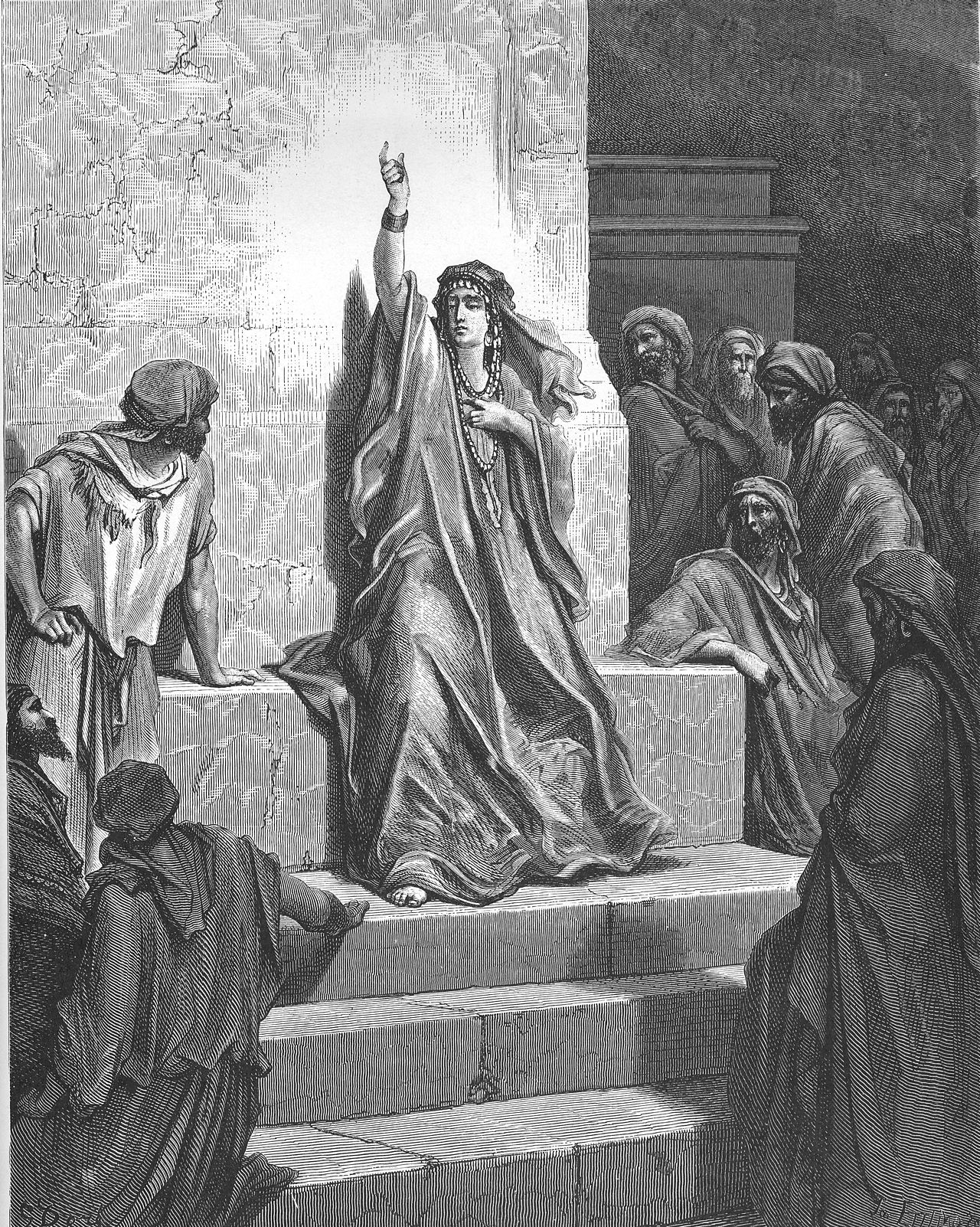
Deborah Praises Jael by Gustave Doré
Among their numbers were:
queens
prophets
judges
politicians
as well as women who were distinguished for their faith, integrity, loyalty, courage, and beauty.
In addition to providing insight into the experiences of these fascinating women, David explains their historical legacies, including:
the preservation of the Davidic line
the cementing of Judaism’s attitude towards celibacy
the power of prayer
the importance of education
women’s connection to Jewish religious practice.
He also traces the changing lot of women throughout the biblical period, from empowerment to disempowerment and back again.
This is the first part of a seven-part series on women in Jewish History David delivered at the Jewish Museum of Australia in 2017. Unfortunately, only some of the talks in the series were successfully recorded. You can find existing lectures by David from that series as well as from others talks on women in Jewish History David has given here:
In the first millennia BCE, the prophets of Israel launched an unprecedented spiritual revolution, the impact of which has resonated throughout the ages and across the world. In this fascinating lecture, David presents an overview of the twelve ‘minor’ prophets of Israel. Although their messages contained profound insight, analysis, and inspiration, these prophets are known in English as ‘minor’ because their books are short compared to those of the ‘major’ prophets: Isaiah, Jeremiah, and Ezekiel. With lightning speed and characteristic clarity, David takes us through the story of these prophets and reminds us of the remarkable relevance of their words for us today.
In this podcast episode, David examines the life and ideas of the following prophets:
Hosea
Joel (Yoel)
Amos
Obadiah (Ovadiah)
Jonah (Yonah)
Micah
Nachum
Habakkuk
Zephaniah
Haggai
Zechariah
Malachi
He places these prophets in their historical context, looking at the following periods and events:
life in the northern Kingdom of Israel and the Kingdom of Judea (Judah)
the destruction of the northern kingdom by the Assyrians
the assault on Jerusalem by the Assyrians
the defeat of the Assyrians by the Persians
the Babylonian exile
the return to Zion and the rebuilding of Jerusalem under the proclamation of Cyrus
Beginning in the year 66 CE, the Jewish Revolt in the land of Israel launched a decades-long conflict with the Roman Empire. In this podcast episode, David examines three Roman sieges of Judean fortified towns and cities, culminating in the devastation of the destruction of Jerusalem in 70CE. He describes the key characters during this period, including the Jewish commander-turned-historian Josephus and the Roman general Vespasian, a master of siege warfare. David also creates a vivid picture of each of the battles, setting the scene, recreating the tensions, and leading us to the inevitable catastrophic end.
This Jewish history lecture includes discussions on the:
historical context leading up to the Jewish Revolt of 66 CE
political and geographical necessities for Rome in subduing the Jewish rebellion
character and military experience of Vespasian
strengths and flaws of the Jewish commanders, including Elazar ben Shimon and Josephus
devastation of Jewish factionalism and zealotry
military capabilities and technological ingenuity of the various forces, including the importance of engineering
role played by the environment and terrain in the sieges
use of military intelligence
catastrophic destruction and the enormous loss of life
implications for Jewish life in the land of Israel.
Maps
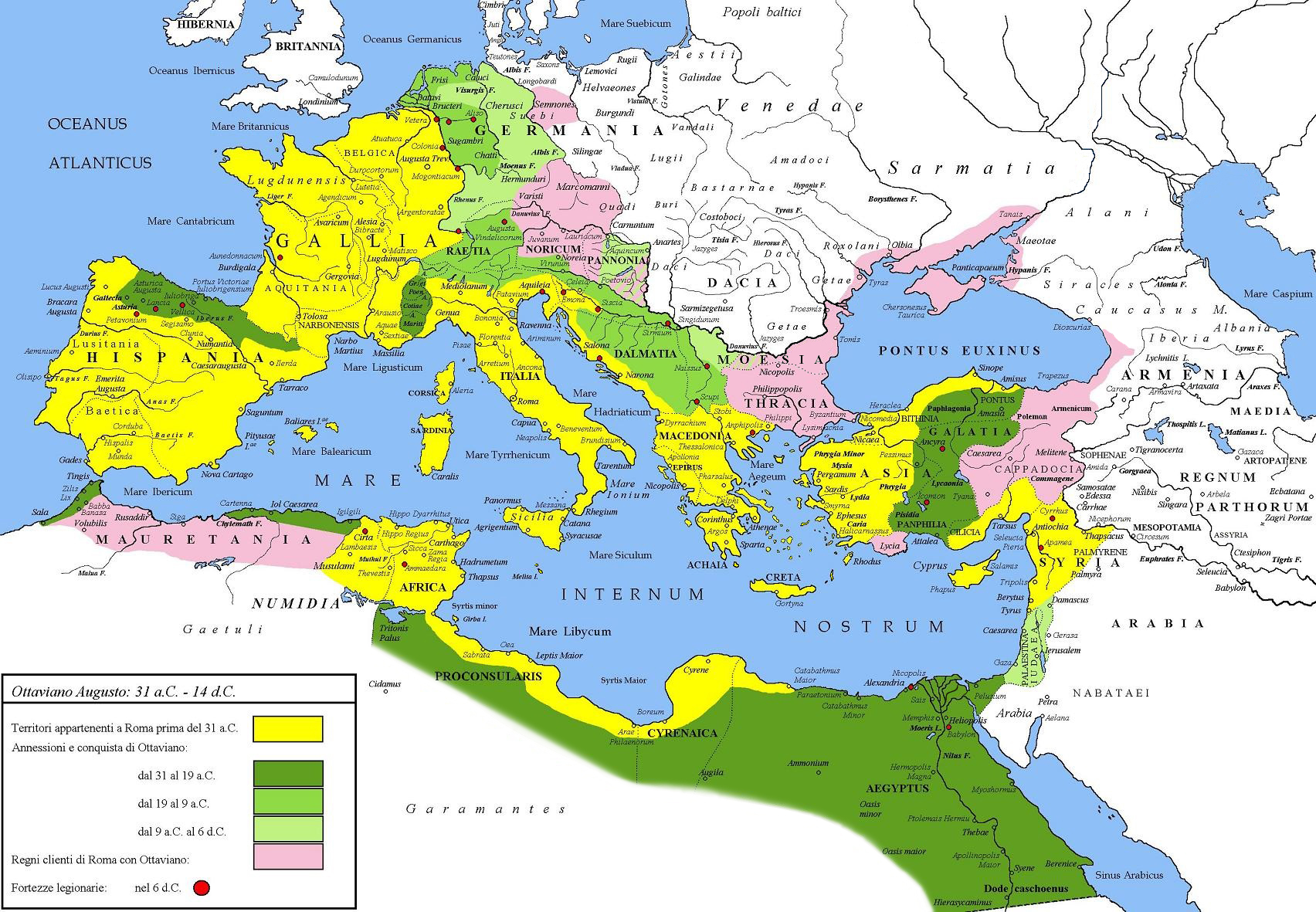
Extent of the Roman Empire under Augustus. Yellow represents the extent of the Republic in 31 BC, while green represents gradually conquered territories under the reign of Augustus, and pink areas represent client states. CC BY-SA 3.0. Images by Cristiano64. https://en.wikipedia.org/wiki/Pax_Romana#/media/File:Impero_romano_sotto_Ottaviano_Augusto_30aC_-_6dC.jpg
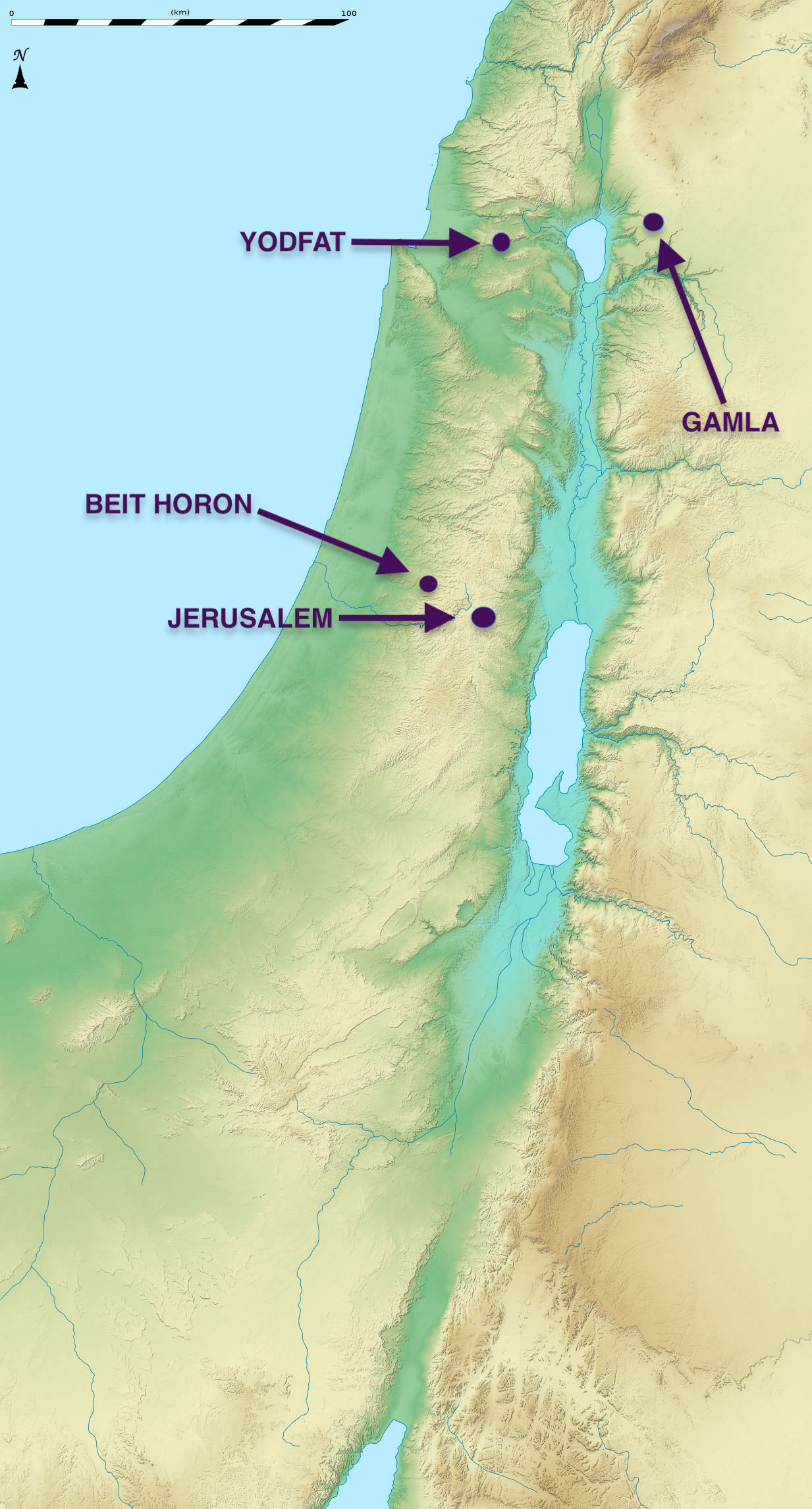
Israel relief location map-blank by Eric Gaba – Wikimedia Commons user: Sting. Additions by M Solomon – geographical placements rough depictions only https://commons.wikimedia.org/wiki/File:Israel_relief_location_map-blank.jpg
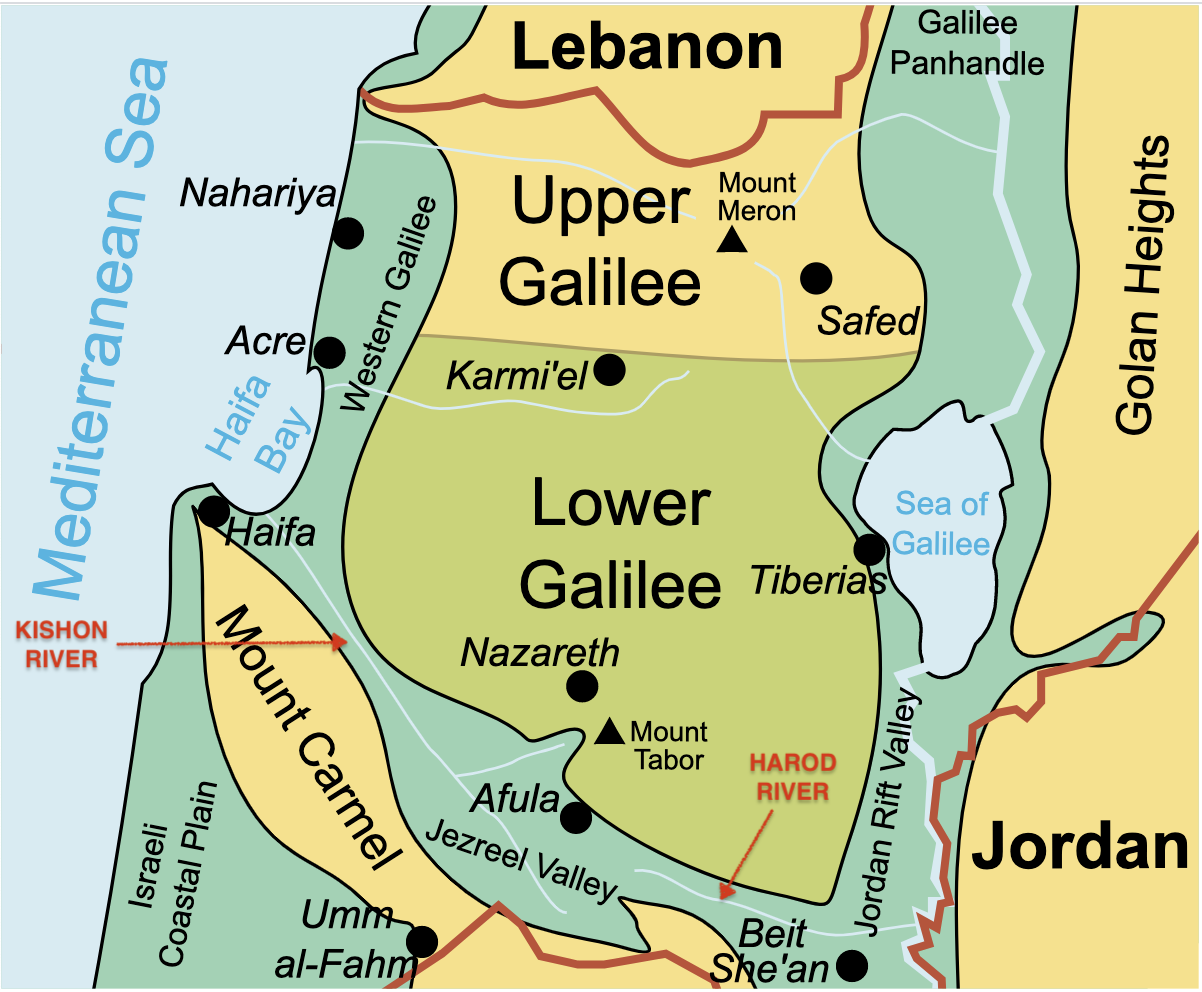
Map of Lower Galil provided under a Creative Commons licence by Daniel Baránek with additions from M Solomon (https://commons.wikimedia.org/wiki/File:Lower_Galilee_map.svg)
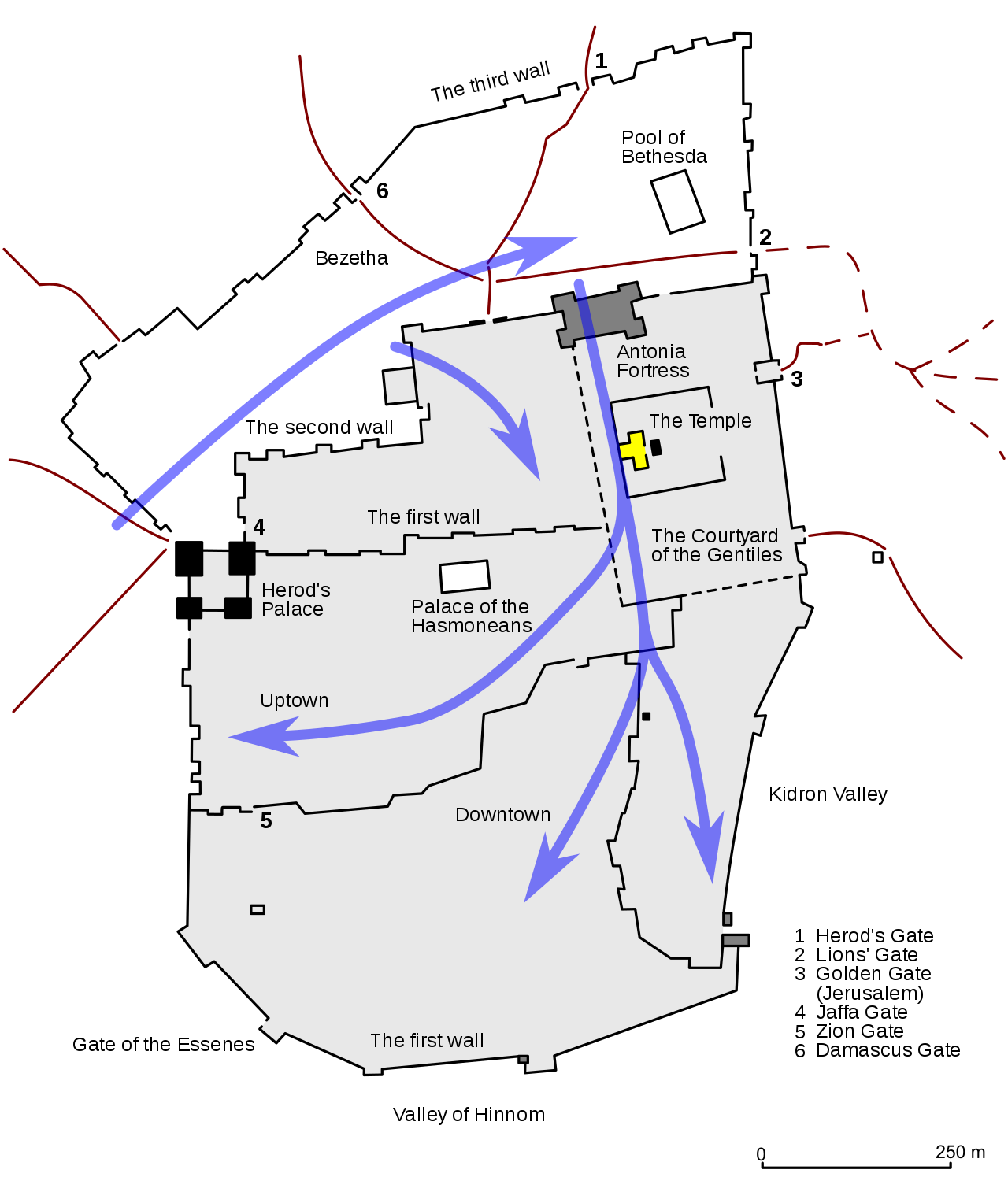
Map indicating progress of the Roman army during the siege by Goran tek-en. Creative Commons Attribution-Share Alike 4.0 International. https://en.wikipedia.org/wiki/Siege_of_Jerusalem_(70_CE)#/media/File:Siege_of_Jerusalem_(70_CE)-en.svg
Archeological sites
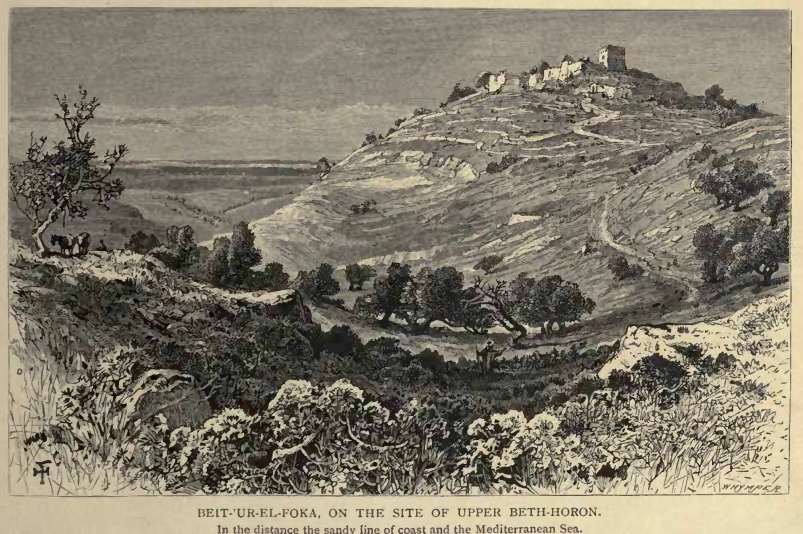
Bethoron Elyon; Beth-Horon in 1880.Picturesque Palestine, Sinai and Egypt D. Appleton New York 1883. Public domain.
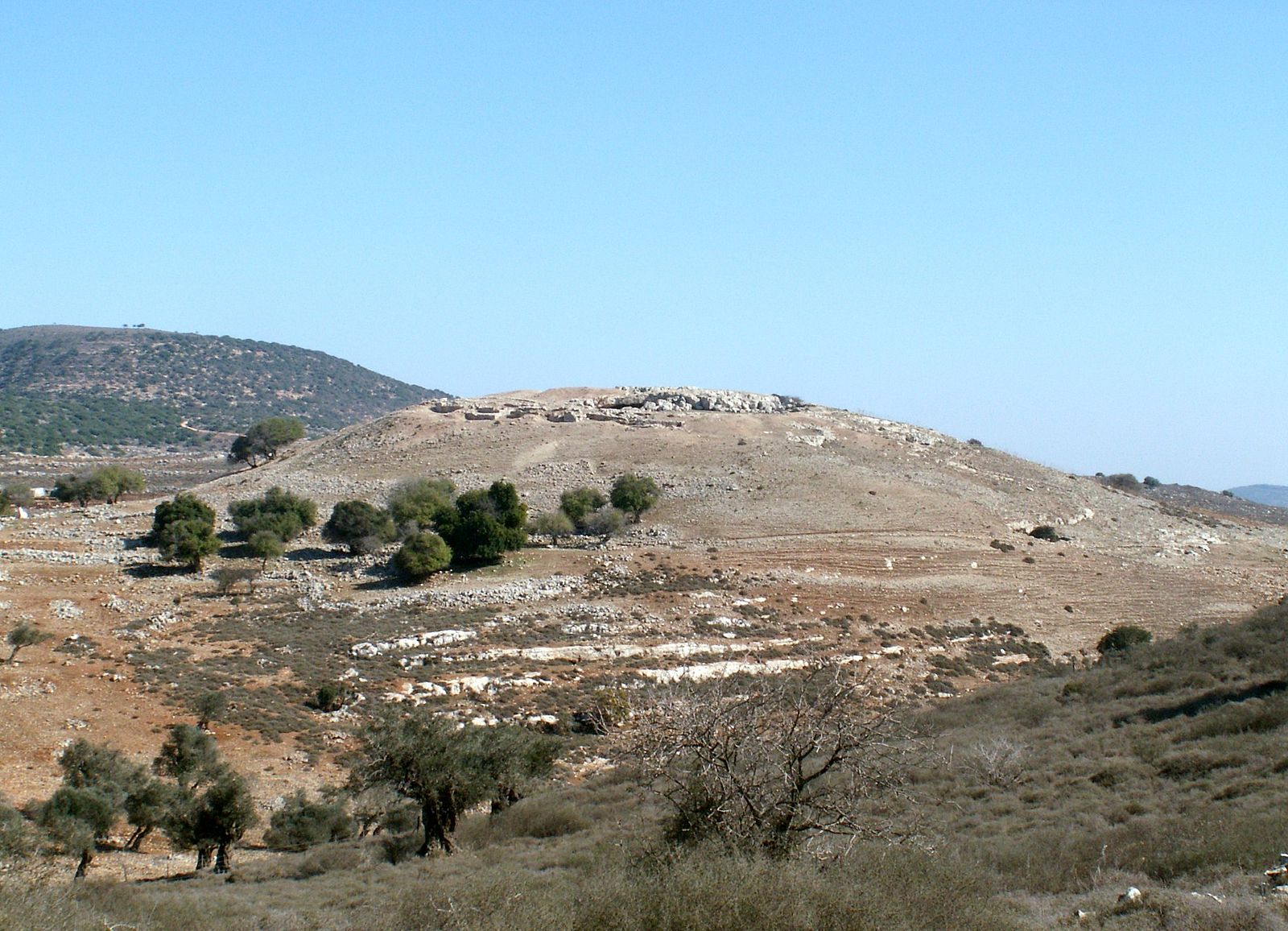
Hilltop location of ancient Yodfat (Jotapata), showing excavated remains of fortifications by Oren Dozen. This file is licensed under the Creative Commons Attribution-Share Alike 3.0 Unported license. https://commons.wikimedia.org/wiki/File:Yodfat_071108_001.jpg
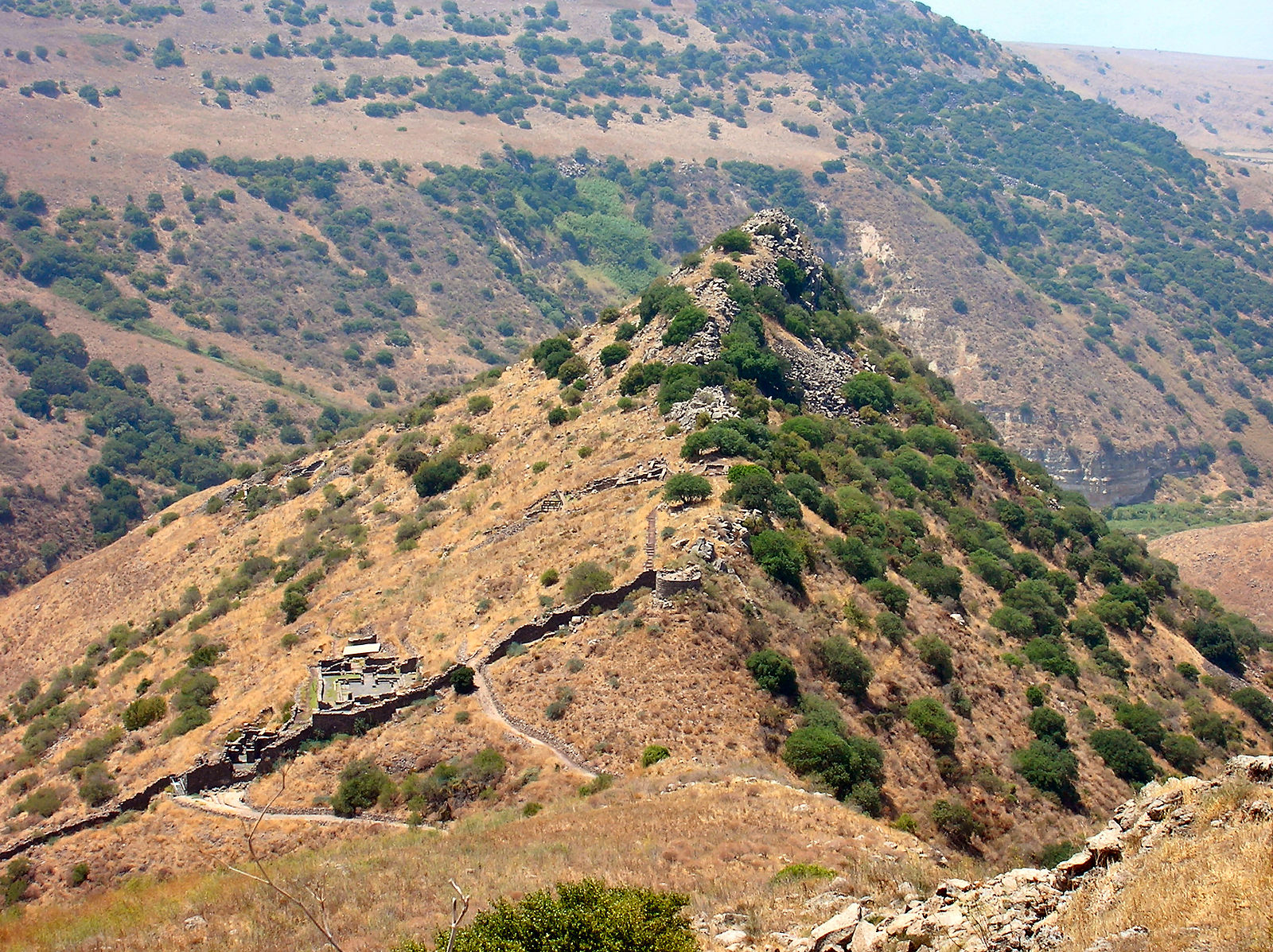
Gamla view. Public domain.https://ang.wikipedia.org/wiki/Ymele:Golan_Heights_-_Gamla_view.jpg#/media/Ymele:Golan_Heights_-_Gamla_view.jpg
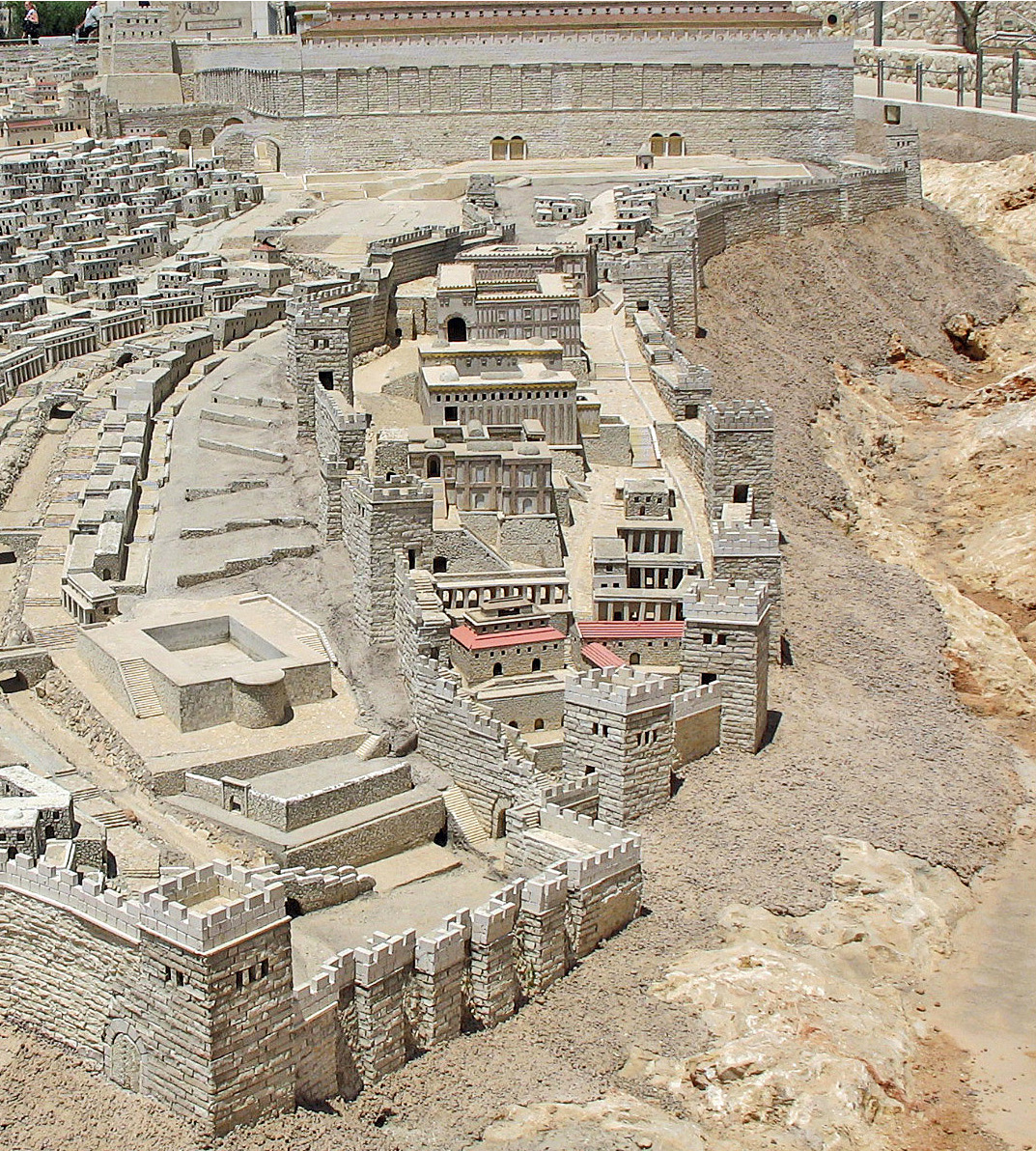
The Second Jerusalem Temple. Model in the Israel Museum. Image provided by Ariely and licensed under the Creative Commons Attribution 3.0 Unported license. https://commons.wikimedia.org/wiki/File:Bethoron_Elyon_-_Upper_Bethoron_1880.jpg
Find more of David Solomon’s podcast, with dozens of lectures on Jewish history, the Bible, Jewish philosophy, and Kabbalah here.
This four-part series was recorded at Caulfield Shule in 2019.
This website uses cookies to improve your experience. We'll assume you're ok with this, but you can opt-out if you wish.AcceptRead More
Privacy & Cookies Policy
Privacy Overview
This website uses cookies to improve your experience while you navigate through the website. Out of these cookies, the cookies that are categorized as necessary are stored on your browser as they are essential for the working of basic functionalities of the website. We also use third-party cookies that help us analyze and understand how you use this website. These cookies will be stored in your browser only with your consent. You also have the option to opt-out of these cookies. But opting out of some of these cookies may have an effect on your browsing experience.
Necessary cookies are absolutely essential for the website to function properly. This category only includes cookies that ensures basic functionalities and security features of the website. These cookies do not store any personal information.
Any cookies that may not be particularly necessary for the website to function and is used specifically to collect user personal data via analytics, ads, other embedded contents are termed as non-necessary cookies. It is mandatory to procure user consent prior to running these cookies on your website.